
Let’s face it: being a product manager in IT is like being the conductor of an orchestra where half the musicians are playing jazz, the other half are debating quantum physics, and you’re just trying to make sure no one sets the stage on fire. It’s a wild ride, and sometimes you need a cheat sheet to keep everything from going off the rails.
Whether you’re a seasoned PM who’s seen it all or a newbie still figuring out why everyone keeps talking about “sprints”, this article is here to help. Think of it as your Swiss Army knife for product management—compact, practical, and ready to save the day when you’re knee-deep in feature requests, stakeholder meetings, and the eternal debate of “build vs. buy.”
So grab a coffee, take a deep breath, and let’s dive into the ultimate cheat sheet for IT product managers. Because let’s be honest, we could all use a little help keeping the chaos in check.
1. Core Responsibilities of a Product Manager
Think of a product manager as the bearer of four sacred flames, each illuminating a different aspect of product development:
- The Flame of Vision: You transform fuzzy possibilities into crystal-clear direction. Your job isn't just to "set a vision" - it's to be the lighthouse that keeps everyone oriented in the same direction when the waters get rough.
- The Flame of Clarity: You turn the chaos of competing demands into a clear path forward. Your superpower is saying "no" to good ideas so you can say "yes" to great ones. Every feature request that lands on your desk gets filtered through the lens of user value and business impact.
- The Flame of Truth: You transform gut feelings into ground truth. Whether it's through data analysis, user research, or market insights, you're constantly separating reality from wishful thinking. Your decisions aren't just informed - they're illuminated by real evidence.
- The Flame of Unity: You transform silos into synergy. Engineering, design, marketing, sales - you help these different worlds speak the same language and march toward the same goals. You're not just building bridges; you're creating a shared universe of understanding.
Each of these flames requires constant tending. Let any one die out, and the product development process starts to lose its way. Keep them all burning bright, and you light the path to product success.
2. Your Framework First-Aid Kit 🛠️
Think of frameworks as your emergency tools - each one designed for specific product management emergencies. Here's when to reach for each one:
- When Chaos Reigns: Agile Development Your team-alignment compass. With clear roles, rhythmic ceremonies, and visible artifacts, it's how you turn a group of talented individuals into a high-performing orchestra.
- When Work Keeps Piling Up: Kanban Your traffic control system. Visualize the flow, identify bottlenecks, and maintain a sustainable pace. Because drowning in work isn't a strategy.
- When You're Lost in the Woods: OKRs (Objectives and Key Results) Your strategic GPS. Connect daily work to bigger goals, measure what matters, and keep everyone oriented toward true north.
- When Everyone's Running in Different Directions: Scrum Your team-alignment compass. With clear roles, rhythmic ceremonies, and visible artifacts, it's how you turn a group of talented individuals into a high-performing orchestra.
- When You're Building in the Dark: Lean Startup Your rapid learning engine. Build, measure, learn - faster than your uncertainty can grow. Because guessing is expensive, but learning is priceless.
Remember: These aren't just frameworks - they're your survival tools in the product management wilderness. Master them, mix them, and most importantly, know when to reach for each one.
3. Product Lifecycle Stages
1. Ideation
Where great ideas are born. Identify problems, brainstorm solutions, and validate concepts.
Value Chain Analysis
Spot customer pain points and innovation opportunities.
Blue Ocean Strategy
Use the Strategy Canvas to differentiate from competitors.
Design Thinking
Empathize, define, ideate, prototype, and test.
Six Thinking Hats
Explore ideas from six perspectives.
Lean Canvas
One-page business model for your product idea.
Jobs to Be Done (JTBD)
Focus on what customers are trying to achieve.
SWOT Analysis
Assess strengths, weaknesses, opportunities, and threats.
SCAMPER
Spark creativity with seven types of questions.
Brainstorming
Mind mapping and reverse brainstorming.
Business Model Canvas
Visualize your business model.
2. Discovery
Dive deep into user research, define requirements, and create prototypes.
User Personas
Build detailed profiles of your target users.
Storyboarding
Map out user experiences visually.
User Journey Maps
Visualize the user's interaction with your product.
MoSCoW Method
Prioritize features: Must-have, Should-have, Could-have, Won't-have.
Kano Model
Categorize features by customer satisfaction (basic, performance, delighters).
3. Development
Build the product iteratively with cross-functional teams.
Agile Methodology
Deliver value in sprints.
Scrum
Use roles, ceremonies, and artifacts to manage work.
Kanban
Visualize workflows and optimize delivery.
CI/CD
Automate testing and deployment for faster releases.
4. Launch
Plan go-to-market strategies, train stakeholders, and release the product.
Porter's Value Chain
Align marketing, sales, and service for a smooth launch.
Go-to-Market (GTM) Strategy
Define audience, messaging, channels, and metrics.
AARRR Pirate Metrics
Track Acquisition, Activation, Retention, Revenue, and Referral.
Beta Testing
Gather feedback from a small user group before full launch.
Stakeholder Mapping
Engage key stakeholders for a successful rollout.
5. Growth
Optimize features, scale usage, and expand to new markets.
Growth Hacking
Use creative, low-cost strategies to grow your user base.
A/B Testing
Experiment with feature variations to find what works best.
RICE Framework
Prioritize growth initiatives by Reach, Impact, Confidence, and Effort.
Customer Feedback Loops
Continuously gather and act on user feedback.
6. Maturity
Maintain the product, improve efficiency, and explore new opportunities.
Product Led Growth (PLG)
Self-service onboarding, freemium models, and data-driven insights.
Continuous Experimentation
A/B testing, feature flagging, and optimization.
Product Portfolio Management
Use the BCG Matrix to assess product positioning.
Customer Success
Build loyalty with predictive analytics, community building, and advocacy.
Ecosystem Thinking
Develop APIs, third-party integrations, and marketplaces.
Data Monetization
Offer insights-as-a-service and anonymized data partnerships.
Automation
Reduce costs and improve efficiency with automation.
Diversification
Explore new pricing tiers, subscription models, and geographic expansion.
7. Retirement
Sunset outdated products and transition users to new solutions.
Sunset Strategy
Plan timelines and communication for phasing out the product.
Customer Migration Plan
Guide users to transition smoothly to new products.
Post-Mortem Analysis
Reflect on lessons learned for future projects.
4. Essential Skills for IT Product Managers
- Technical Acumen: Understand software development, APIs, databases, and cloud technologies.
- Data-Driven Decision Making: Use analytics tools (e.g., Google Analytics, Mixpanel) to inform decisions.
- Stakeholder Management: Communicate effectively with engineers, executives, and customers.
- User-Centric Thinking: Advocate for the user through personas, journey maps, and usability testing.
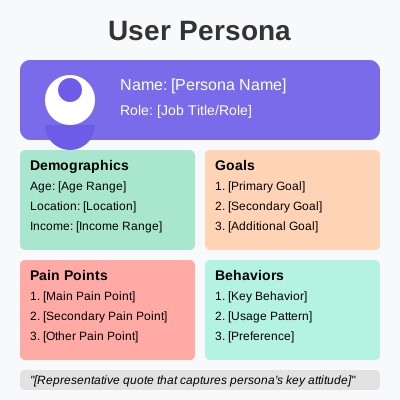
User Persona: Fictional user profiles that guide design decisions based on target audience.
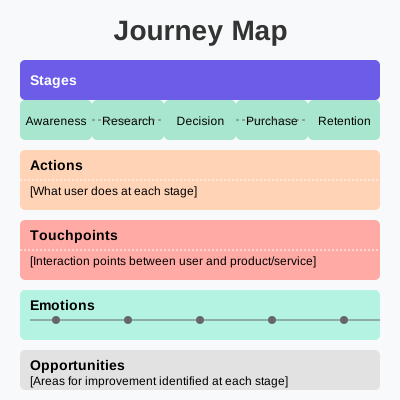
Customer Journey Map: Visual timeline showing how users interact with product across touchpoints.
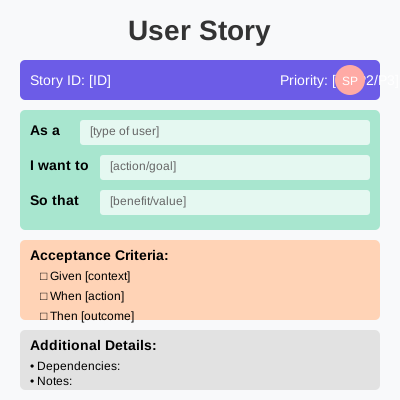
User Story: Simple feature descriptions written from user perspective to guide development.
- Prioritization: Use frameworks like RICE (Reach, Impact, Confidence, Effort) or MoSCoW (Must-have, Should-have, Could-have, Won’t-have).
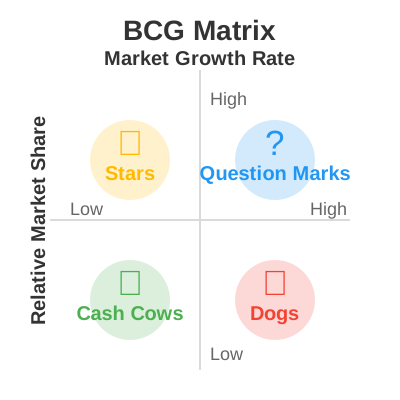
BCG Matrix: Use it to decide which products to invest in or divest from.
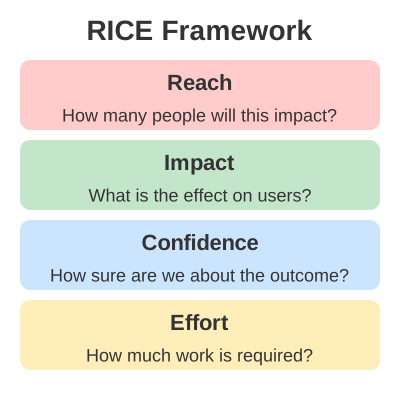
RICE Framework: Use it to prioritize features within a specific product.
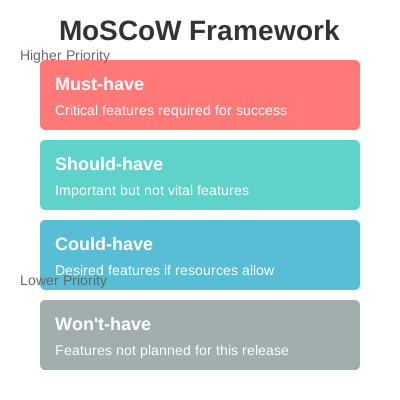
MoSCoW Method: Use it to prioritize tasks or features for a specific release or sprint.
5. Your Product's Vital Signs (Track These or Die Trying)
Think of your product as a patient in the ICU - you need to monitor these vital signs religiously. Each metric category tells you if your product is thriving or needs emergency intervention:
- Active Users: Your product's pulse - if it's weak or irregular, you've got problems
- Session Time & Frequency: Blood pressure readings that show if users are getting value
- Critical Path Completion: Like checking reflexes - are users actually doing what they're supposed to?
Heartbeat Metrics (Core Health)
- Customer Acquisition Cost: How much you're bleeding to get new users
- Revenue Per User: The nutrition your product needs to survive
- Churn Rate: How fast you're losing life force (users)
Blood Work (Revenue Health)
- System Response Time: Your product's reaction speed
- Error Rates: Pain points that need immediate attention
- Crash Rate: Major organ failures you can't ignore
Nervous System (Technical Health)
- Feature Adoption: New muscle growth
- Viral Coefficient: Your product's ability to replicate
- Net Promoter Score: The immune system - how well users fight for your product
Growth Hormones (Future Health)
Remember: Just like a doctor doesn't just collect vitals but actually treats the patient, don't just track these metrics - act on them. Your product's life depends on it.
6. Common Pitfalls to Avoid
Avoid these common traps to keep your product and team on the path to success:
- The Feature Hoarding Syndrome: Saying "yes" to every feature request until your product becomes a bloated monster that no one can understand or maintain. Remember: every feature you add is a feature you'll need to support forever.
- The Technical Debt Time Bomb: Ignoring the growing pile of technical shortcuts until one day your development team can't make a single change without breaking ten other things. Pay your technical debts early, or they'll charge compound interest.
- The Echo Chamber Effect: Getting so wrapped up in your own vision that you forget to listen to users, leading to a perfectly engineered solution to the wrong problem. Your product roadmap shouldn't be a monologue.
- The Consensus Trap: Trying to make everyone happy until your product becomes so watered down it makes no one happy. Leadership means making tough choices, not taking polls.
- The Perfection Paralysis: Endlessly polishing features while your competition races ahead. Perfect is the enemy of launched.
- The Data Drowning: Getting so lost in metrics and analytics that you forget the humans behind the numbers. Not every product decision needs a spreadsheet.
- The Shiny Object Syndrome: Chasing every new technology trend while your core product crumbles. Innovation should solve problems, not create them.
- The Hero Complex: Trying to solve everything yourself instead of empowering your team. Being a great PM means being a great delegator.
Each of these pitfalls comes with a valuable lesson. Stay mindful, and your product and team will thrive.
7. Your Product Management Command Center
Think of these tools as your product management weapons - each one designed for specific battles you'll face. Here's your arsenal:
- FullStory ($$$): Watch users struggle in real-time. Pro tip: Use session replay to understand why users abandon your product.
- Maze ($$): Test prototypes before building. Favorite among PMs for its quantitative + qualitative insights.
- UserTesting ($$$): The gold standard for user research. Worth every penny when you need deep user insights.
- Dovetail ($$): The new kid on the block for organizing user research. Incredible for pattern recognition across interviews.
Understanding Users Like a Mind Reader
- ProductBoard ($$$): The Rolls-Royce of roadmapping. Connects customer feedback directly to feature planning.
- Amplitude ($$$$): Your product's black box recorder. The ML-powered insights are like having a data scientist on your team.
- Coda ($$): The Swiss Army knife for product specs. Top PMs love its flexibility for complex decision frameworks.
- Height ($$): The new star for product operations. Bringing clarity to chaotic product decisions.
Decision Making Artillery
- Linear ($): Jira's cooler, faster cousin. The keyboard shortcuts will make you feel like a product ninja.
- LaunchDarkly ($$$): Feature flags that let you sleep at night. Essential for controlled rollouts.
- Retool ($$): Build internal tools at lightning speed. Your engineers will thank you.
- Shortcut ($$): The perfect middle ground between Trello's simplicity and Jira's power.
Building & Shipping Machine
- Mixpanel ($$$): The Ferrari of product analytics. Their funnel analysis is unmatched.
- PostHog (Open Source): Self-hosted analytics for the privacy-conscious. Growing fast among tech companies.
- Heap ($$$$): Capture everything now, ask questions later. Worth it for companies drowning in data questions.
- June ($): AI-powered product analytics that actually makes sense. Perfect for early-stage startups.
Measurement Command Center
- Figma ($$$): The new standard in design collaboration. The multiplayer feature is pure magic.
- Notion ($$): Your product team's second brain. Templates are your secret weapon here.
- Loom ($): Async communication on steroids. Use it for quick product demos and bug reports.
- Miro ($): The infinite canvas for product thinking. Essential for remote product teams.
Collaboration Headquarters
Pro Tips:
- Start with Notion + Linear + Amplitude for a solid foundation.
- Most tools offer startup discounts - always ask!
- Focus on mastering one tool per category before expanding.
- Check G2 reviews for recent changes - tool quality can shift fast.
Remember: Tools should solve problems, not create them. Don't fall into the trap of tool overload. Pick your battles (and your tools) wisely.
8. Field-Proven Strategies from Elite Product Teams
Top product teams consistently excel by mastering these key areas:
- Use the "Three Lens" approach for features:
- Business Value: Revenue/cost
- User Value: Satisfaction/adoption
- Technical Value: Scalability/maintenance
- Document decision frameworks in a "Product Decision Playbook" that evolves with your team.
- Hold regular "Pre-Mortem" sessions for major decisions: "Imagine this failed - what caused it?"
1. Decision-Making Excellence
- Schedule regular "Technical Health" reviews with engineering leads.
- Maintain a "Tech Debt Budget" - allocate 20-30% of sprint capacity to infrastructure and cleanup.
- Create clear "Quality Gates" for releases: automated tests, security scans, performance benchmarks.
2. Technical Excellence Without Paralysis
- Build a "Stakeholder Communication Matrix" - customize updates by role and interest.
- Use "Demo Days" to showcase progress and gather feedback across departments.
- Create "Impact Maps" linking technical work to business outcomes.
3. Stakeholder Management Mastery
- Implement "Silent Meetings" - first 10 minutes for reading/commenting on proposals.
- Run "Friction Logs" where team members use their own product as customers.
- Maintain a "Learning Backlog" of insights from customer feedback and incidents.
4. Feedback Loop Optimization
- Use "Opportunity Solution Trees" to connect strategic goals to tactical work.
- Implement "Innovation Windows" - dedicated time for exploring new technologies.
- Create "Health Metrics Dashboards" combining technical, user, and business KPIs.
5. Strategic Execution Balance
Each practice should be adapted to your context - the key is understanding the principles behind them and adjusting for your team's needs.
The Art of Navigation
Product management isn't just about mastering frameworks or memorizing methodologies. It's about being the captain of a ship navigating through ever-changing waters. Your frameworks are your instruments, your metrics are your compass, and your team is your crew. Some days you'll sail through calm seas, methodically checking your charts and plotting your course. Other days you'll face storms that no framework could have prepared you for, where you'll need to rely on instinct, experience, and the trust you've built with your crew.
Remember: Your most powerful tool isn't in this article – it's your judgment, refined through successes and failures, strengthened by curiosity, and tempered by humility. The best product managers aren't the ones who never make mistakes; they're the ones who learn from every voyage, who know when to hold steady and when to change course, who can read both data and people with equal skill.
So take these tools and frameworks as your navigation instruments, but trust in your ability to lead through uncertainty. In the end, product management isn't about perfect execution – it's about moving forward with purpose, learning continuously, and bringing your team along on the journey toward creating something truly valuable.
Your next product decision awaits. Set your course, trust your instruments, rally your crew, and sail on.